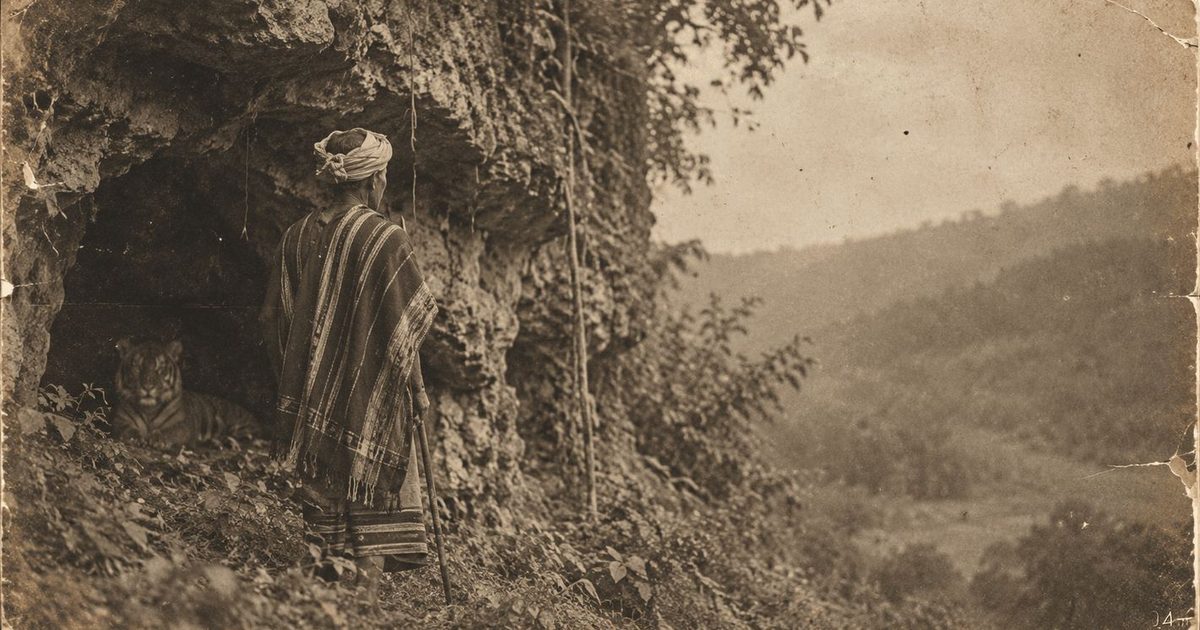
Long ago, the kom ancestors lived underground but on attempting to escape through the large cave of Khurpui there was a tiger waiting! Depending on how each ancestor interacted with the tiger, the Kom people received their family names.
Three men and one tiger:
The most well known version of this story involves three leaders.
Karongpa was wearing a striped cloth that resembled a tiger's fur. The tiger thought he was a tiger so they became friends. To this day the Karong clan will not kill or eat a tiger. Some versions of the story say that Karongpa used his friendship with the tiger to make it docile.
Saichapa then emerged and killed the tiger. Some versions of the story say he shot it with a bow and arrow. The Saicha (sometimes Saiche) clan can trace their roots back to him.
Leivonpa removed the tongue from the tiger and wore it around his waist. The Leivon clan can trace their roots back to him.
The people then emerged onto the high land and celebrated with a huge party. This area is referred to as Chungkhopui by the Kom.
Modern day clans:
The main Kom clans are usually listed as Karong, Saicha, Leivon, Tellein, Hmangte and Serto. However, sometimes Lupheng and Thingpui are added too. This is because some sources refer to Saiche and Serto as the same family name. Karong is also sometimes referred to as Shongthu. Leivon is said to be related to an older name of Misai. Tellein and Hmangte are said to have been added to the clan system later on.
When writing about the clans, note which source you are using. You may want to check local elders to see which version of the name they use for their family.
Clan meaning in everyday life:
The clan is not just a surname but determines who you can marry. The Kom are exogamous meaning you cannot marry within your clan. This applies to sub clans within the main clans too. The clan is passed down the father's line. The eldest male will be the head of the family and the youngest son usually remains with the family house.
The tiger story is also still used in everyday life. For example the Karong clan do not harm tigers due to their taboo.
A legend to dance to!
The story is also performed in a dance. The Kom celebrate the Khurpui-Lam (meaning something like 'cave dance') festival in Imphal. According to Kom tradition this celebration began after the tiger was killed. There have been news articles referring to this festival being held at the Palace Compound in Imphal in 2018. The Kom organisers have requested that the festival is recognised officially by the state.
Not just the Kom-
Many communities in the area have a story about the cave and tiger. The Anal people have their own cave story. The Aimol, Chiru, Koireng, Chorei, Ranglong and Purum all share the cave memory of the Kom. This is why they are often grouped together as the Kom-rem (cave people). The story of the tiger guarding the mouth of the cave is common throughout this area of Northeast India however each tribe has their own version.
Discover more about the [Kom](https://choreinow.com/tribes/kom) .
Origins and migration - From Burma and Arakan to Tripura and Manipur.
Villages - Sagang, Kangathei, Khoirentak, Mantak and more.
Culture and religion - Traditional beliefs in Pathen, the Lukasun ceremony and the modern church.
Famous people - Boxer Mary Kom who grew up in Kangathei.
Local tribes - Aimol, Chiru, Koireng and Purum, who are the other four tribes in the Kom-rem group.
Sources - The Kom history and linguistic classification paper you were provided with, public encyclopaedia pages about the Kom people, an interview with a Kom cultural expert, CHIRU and Kom tribe reference pages, and Northeast Now articles about the Khurpui-Lam festival.