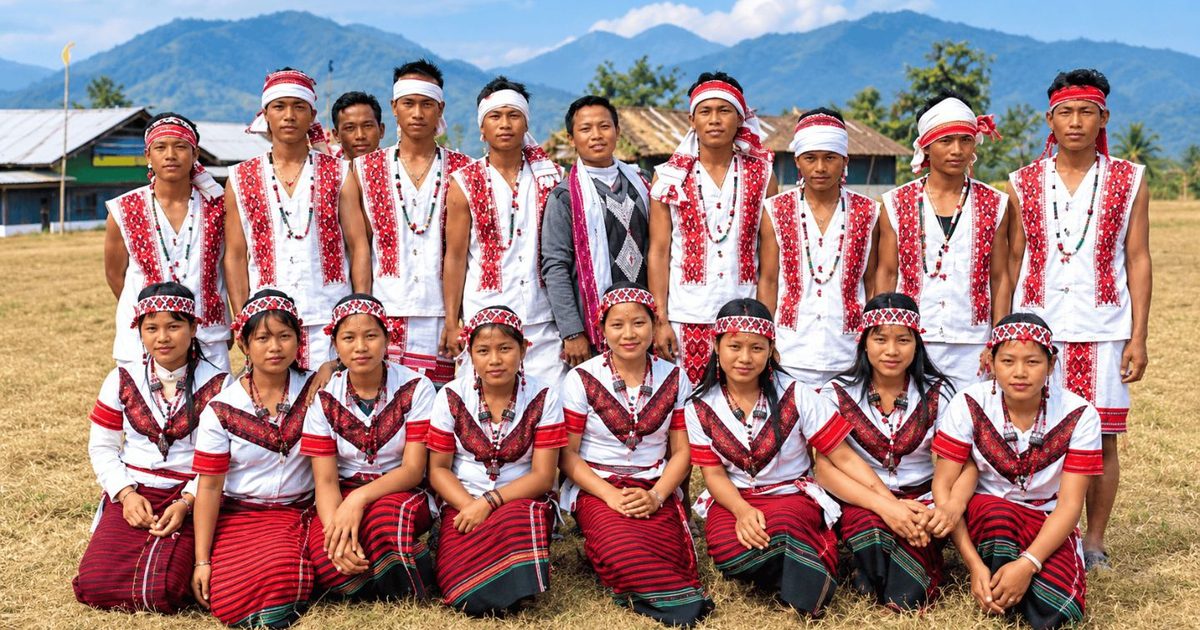
Every year towards the end of January or beginning of February, the [Hrangkhol](https://choreinow.com/tribes/hrangkhol) villages of Dima Hasao in Assam become very busy. The tribe come together in their best clothes and dance and play their drums (known as Dar) to begin their main festival. This is known as Ruolsafak.
Ruolsafak (Harvest festival):
The name Ruolsafak (or Rual-Chapak) shows just how important this festival is to the [Hrangkhol](https://choreinow.com/tribes/hrangkhol) people. It means ‘sitting and eating meat with friends and neighbours after the harvest’. They also give thanks to their Sun God for the crops they have had during the year.
Hrangkhols villages such as Zion, Lungkhok, Muolpung and Rabi come together to celebrate. As it is a time to say goodbye to the old year and welcome the new year, the atmosphere feels like a harvest festival and a New Year celebration.
Parangat (Welcome Spring):
The second popular festival is Parangat which means flower. On a full moon day, the festival begins in the evening and continues throughout the night. During the day, no pathways into the village are open apart from the main entrance. The villagers go to the nearby forest to collect wild flowers and greet each other. They sing and dance throughout the night to welcome the spring.
Fish, Wealth and Bhailam Dance:
The [Hrangkhol](https://choreinow.com/tribes/hrangkhol) people, like many other hill tribes in the area, believe that fish is a sign of wealth and prosperity. This is reflected in their dancing, with many movements mimicking fishing. They have a special dance called Bhailam to show respect to the respected members of their village.
Other dances that are remembered in the villages are Darlam, Doinkini, Rochemiam and Soksollam. The music is played using traditional musical instruments such as the Dar, Cheranda, Rochem and Theile. Music and dancing plays a huge part in all the festivals.
Dress
The men wear traditional clothing, Churia, Kamis, Lukom & Changkaltak whilst the women wear Ponbomtak, Pomnei, Kongkhit & Thepbop. They also wear jewellery such as Jakcher, Chumhrui & Lirthei. There are different spellings of the clothing in different places so members of the community may want to check if they are correct before publishing widely.
Background:
The festivals are based around their farming lifestyle. Most families in Dima Hasao live off farming. Jhum (shifting) farming has been a big part of their lives for a long time. The houses are traditionally built from bamboo and wood with thatched roofs. The villages are often scattered up the hills. With this in mind, Ruolsafak is a way for the community to give thanks to the land.
Why it matters:
As the [Hrangkhol](https://choreinow.com/tribes/hrangkhol) people are a small community, the festivals help pass on their history, language and sense of belonging. Putting this in writing will help younger people, researchers and people outside the area to find it. If you are an elder or member of the village, you may want to add more information such as the songs they sing during Parangat, the movements in Bhailam or the rituals during the harvest.
Discover more about [Hrangkhols](https://choreinow.com/tribes/hrangkhol)
Sources
[Note: The Sentinel (Assam) – Ruolsafak in Dima Hasao 1 st February 2017]
[Note: The Assam Tribune – Hrangkhols Celebrate Ruolsafak]
[Note: Assam Times – Note on Harvest Festival]
[Note: Joshua Project – Hrangkhol in India]
[Note: Indianetzone – Hrongkhols Tribe Dima Hasao]