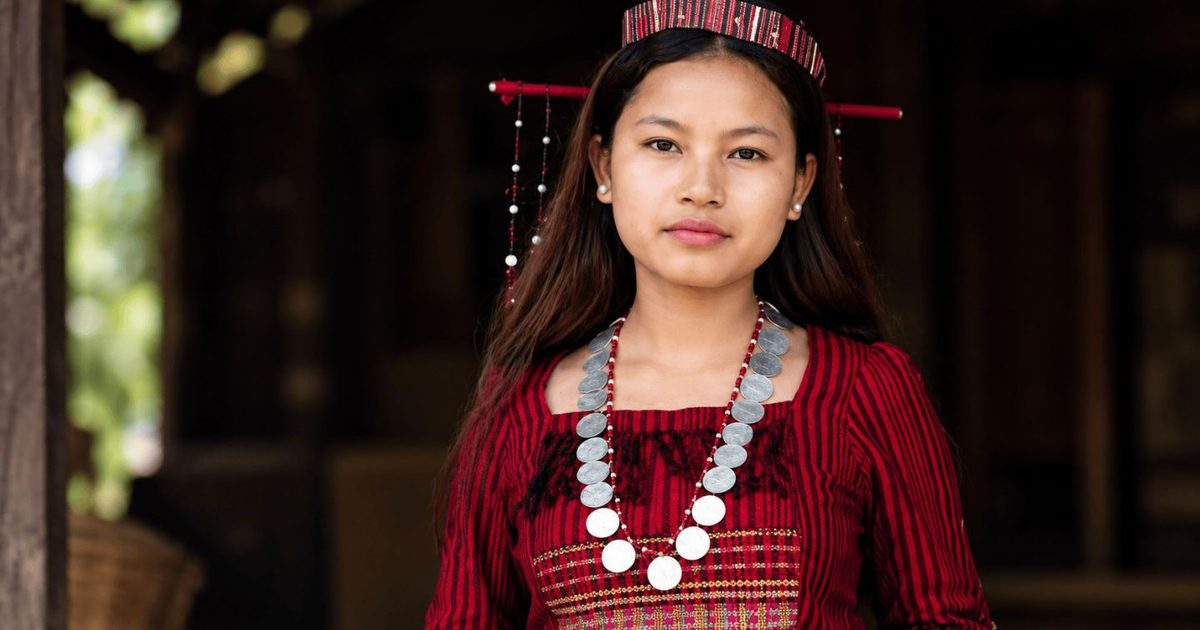
Often we can tell a lot about a people from their clothing. The [Choreis](https://choreinow.com/about-chorei) have many ornaments and clothes as described by [Fonidhor Chorei](https://choreinow.com/about-chorei/personalities) in The Choreis.
**Ornaments**
Both men and women wore ornaments. Women wore them to look attractive. Men wore them to show bravery or love. Some were needed to wear during community celebrations.
**Women**
Rathei: A silver necklace worn mainly during dances and festivals.
Tangka rathei: A necklace made of round coins. An important part of cultural performances.
**Bala**: A thick round bracelet. Jakser: A silver ornament that looks similar to the bala.
**Kuordoi Toya**: A round ornament worn on the lower part of the ear lobe. Similar to earrings.
**Chompar**: An earring worn on special occasions. Kuorbet: A similar earring worn everyday.
**Maduli**: The most unusual ornament. Looks like an earring with a long chain attached. One end is attached to the hair at the back of the head using a samep. The other end is pulled across to the middle of the forehead.
Men :
Kekol*: A thick round bracelet similar to the bala.
Banriel: A flat round bracelet that wraps around the wrist 3 times. The defence group wore this on their left hand to show bravery.
Both men and Women:
Kuordoi: An ornament worn on the ear from the top to the lobe. Similar to the Nepalis.
**Samep**: A hair clip made from bamboo or wood. Needed if you have long hair.
**Kutsobi**: A ring worn on the index finger. Giving someone a kutsobi shows you love them.
The [Choreis](https://choreinow.com/about-chorei) used to wear silver ornaments. However now they favour bronze and gold as people have learnt their value.
Clothing:
Often communities can be recognised by their clothing. The Choreis have their own. The colours, patterns and how they are worn have changed over time.
Cold weather:
Mulri: A thick white cotton cloth. Used as a blanket during winter.
**Zonte Mulri**: A lighter white cloth with cotton stripes. Used at night.
**Rikop**: A shawl worn over the mulri as a blanket.
**Jalmunpuonpha**: A light blanket.
Everyday :
Puonhak: Men’s shawl. Puonvel: Women’s shawl.
**Derkei**: A cloth worn by men. Similar to traditional Bengali clothing.
**Keipereng**: A small cloth measuring 6 inches by 30 inches. Used by men to cover themselves.
**Riemkancholi**: A thick shirt worn whilst working in the fields. Said to protect from mosquitoes and other insects.
Wedding
Puonsen: A red cloth given to the bride by her mother. This allows the elders to bless her.
**Ngoilenghak**: A white cloth with an orange border. Given to the groom by his parents. Once worn the elders bless him with ruai.
Why it is important:
Nothing is purely for decoration. The coin necklace is used during dances. The red cloth is used during the bride’s final blessing at home. The ring is worn to show love. Some are not as common now. The names may not be known to many people. By writing these down it allows the younger people to ask their grandparents about them.
Silver, Shawls and Coins: Ornaments and Dress of the Choreis.
From the rathei necklace to the red puonsen of a bride, discover the ornaments and clothing worn by the Choreis.
Explore the ornaments and traditional clothing of the [Choreis](https://choreinow.com/about-chorei). From silver rathei and kekol bracelets to puonhak shawls and red puonsen.
Learn more about [Chorei](https://choreinow.com/about-chorei)
Chorei ornaments, Chorei clothing, rathei, kekol, maduli, puonhak, puonvel, puonsen, Halam culture, Kuki-Chin heritage