1. Origins, Ancestry & Clan Lineage
The Choreis are an old community within the Halam (Riam) people and the wider Kuki-Chin family.
The Chorei people originate from Sinlung in south-western China. They are of Mongoloid descent and are part of the Chin-Mizo-Kuki group. The related Anal, Chothe, Chiru, Kolhen, Kom, Lamgang, Purum, Tikhup and Vaiphei people all share the same origin of emerging from Khurpui (cave).
History of migration: The first migration from China took place around 5000 BC. The biggest migration took place around the 3 rd Century BC under the Han dynasty.
Another tradition states that the migration took place due to forced labour on the Great Wall under Shi Huangdi (221-207BC) around 200 BC.
The migration was through Yunnan, Tamu and Khampat (Myanmar), Manipur (Palel, Bishanpur, Loktak), Mizoram. Then down the Barak river to Cachar, Tripura and Karimganj.
Name: It is not popularly known that the name was given by King Chandra Manikya due to their small stature or because they arrived late to a royal meeting. The name comes from the game of ruolsiet which is played in Khurpuitabum and Mairingpuonsen. The players jump over rei (axes) and chomphang (bamboo).
Tradition: The leader Luopui planted the abuong kung banyan tree in Tamu-Khampat around 400 BC. He promised that when the branches grew over the tree, the people would unite. Vanlalngul Chorei of Manikbond saw the tree in 1958. It was around 40 bighas big. This tradition also mentions Sima Lersi and Mara Buong Khup.
Culture: Patrilineal, patriarchal and patronymic. The youngest son inherits the ancestral home. Marriage is endogamous within the tribe but exogamous within the clans.
Leadership: Kalim (Chief) lifelong, Kabur (Deputy Chief), Chapia Kalim, Chapia Kabur, Kamsakoy, Jakosum, Tarpui, Bangpui, Chapia. Promoted by succession (meiserinlek). Each clan is represented in the Sengja. The war leader (Tangulien) is chosen at the hanot feast.
2. Geographic Presence & Regional Settlements
Historic settlements reside across the borderlands of northern Tripura, Barak Valley (Cachar/Karimganj) now Sribhumi district, Assam, Mizoram, Manipur, Nagaland, Arunachal Pradesh. Some live in Bangladesh and Myanmar.
Longai River: Magura, Manikbond, Rangamati, Damcherra.
Hingla River: Srirampur, Dolcherra, Nibia, Buydai, Ronpur, Zailien, Zaite.
Tripura: Choreibari, Dharmanagar, Panisagar, Rothabil, Soileng, Dongsoileng, Dhamatilla, Jamtuli, Bandarcherra, Dhartuicherra, Tangpui, Pawlkhuo, Kumarghat, Kanchanpur, Kamalpur, Pharai, Longtorai, Zanthum, Boloram.
History: Khampat/Tamu (Myanmar), Lilichamphai, Rimathenzol, Khuobung, Lushai hills (they were the first to migrate here and left due to a disagreement). Crossed the Long-le-vai-suo river on bamboo boats.
3. Living Culture, Customs & Heritage
Festivals: Zutuithan (Naming), Naituolinsuok (baby to sun), Artuitan, Parsenpei (first rice for child), Laibun, Dierkeinkei (boys puberty), Luongbom inbom (girl’s puberty).
Harvest Festivals & Dances: Loivatlam, Manginkhomlam, Butulam, Loichuonlam, Sarkuogkhang.
Social Dances: Rallam/Ralratlam (winning), Sathatlam (hunting), Koteklam (bamboo dance), Soksolarut (collecting snails), Cheminkan (sword dance), Arkhonginkhel (one legged cock fighting game).
Marriage: Kholaichei, Lu inkhui, Chong rakel zu, Biak zu, Lut zu, Maksa (1-7 years bride service), Ruoi zu, Mokotkhar, Mamapu, Ruaipek, Tuiabuok. The bride is blessed with water, rice, cotton and vaisen flower.
Jewellery: Rathei, Kuordoi, Bala, Kekol, Samep, Jakser, Chompar, Kuorbet, Kutsobi, Maduli, Banriel, Tangka rathei.
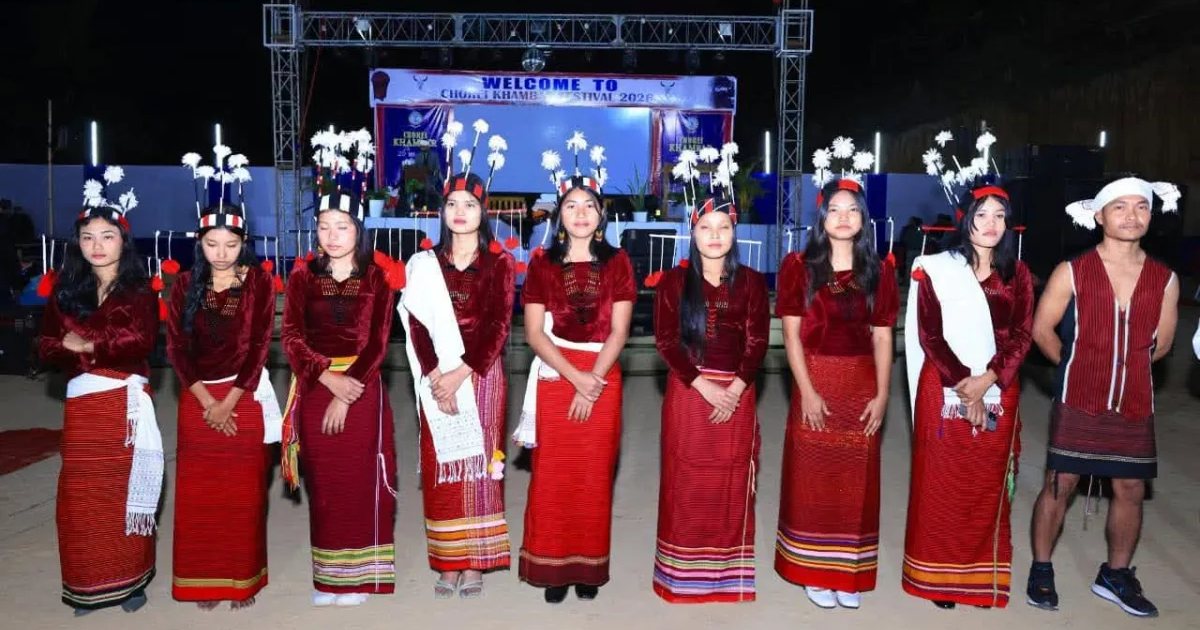
Clothing: Mulri, Zonte Mulri, Rikop, Puonhak (male), Puonvel (female), Derkei, Keipereng, Riemkancholi, Puonsen (bride), Ngoilenghak (groom).
Musical Instruments: Khuong (drum), Rosema (gourd flute), Dangdul (mouth instrument), Saranda (single string fiddle), Theili (bamboo flute), Daar (bronze gong), Zamluong (big gong).
Government: The youth groups in the village are Ruothar (protection) and Beibak ruol (peace keepers) led by Siersep and Sierphit. The Tangva is the messenger for one year.
Traditions: Tangulien la song, Suolam lian buong banyan song, Khunlai & Khuntai legend, Archa Rangkachak & Marimthng.
Religion: Riem doi (traditional religion). Now mostly Christian.
Bibliography & Attestations
1. Main source: Fonidhor (Ngirbulbum) Chorei, The Choreis (booklet with 8 chapters).
2. Zarzolien (Shi Huangdi & Great Wall tradition)
3. Daniel Chorei (Reason for exodus)
4. Pastor V. Manik Chorei (Banyan planted in Tamu & Khampang)
5. Vanlalthlounga (Some immigrant clan came to Tripura)
6. L. Hrangliena Songte (Route taken by Rengpuii chongmang)
7. Vanlalngul Chorei, Manikbond (Visited banyan in 1958).
Acknowledgements in preface: Lt. Laltinphir, Ngirbuljoy, Vanlalngul, Vanneiman, Phunneingir, Lalphunman, Sanglien, Neimanril, Ruolmanlien, Phunvanngul, Lalmanngir, Sukumar, Monotosh, Dorte, Thomas, Mantinhoi